
Car ownership in the Netherlands involves having the confidence to find the right rims (velgen) online at Wheelpoint, which boasts of having the largest offline stock of exclusive brands of rims. The wheels-and-tires company has more than 10,000 different models on display at its 1,000-square metre showroom in Uden, where customers find popular exclusive brands like Concaver, Ferrada, Vossen and Wheelforce.
 Dutch car owners who find out from their mechanics that their vehicle’s rims are no longer roadworthy, are confident that they will find the right rims to purchase online at a competitive price via the Wheelpoint website. After all, an outstanding reputation precedes the company for having served more than 45,000 satisfied customers. All of whom gave positive feedback about the wheel and rim set they purchased online.
Past customers specifically mention the excellent advice and recommendations given by Wheelpoint’s well-trained experts and the online shop’s configuration tools. It’s also worth mentioning that the webshop’s platform is connected to a licence database that gives accurate information about the brand and model of a potential customer’s vehicle.
Car Ownership in The Netherlands is High Despite Rigid Implementation of Vehicle Access Regulations
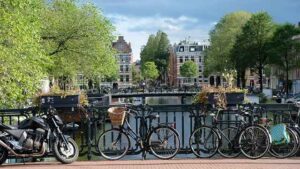 The Netherlands is well-known for being bicycle-friendly in light of the country’s strict implementation of Vehicle Access Regulations for keeping emissions at low to near-zero levels. That being the case, Plug-in Electric Vehicle (PEV) ownership is high in the Netherlands.
This EU country is on record for having a 6.7% share of all new PEVs sold in the EU region; the second largest after Sweden’s 8% share. The latest market reports show that car ownership in the country has been growing, from a current percentage of 74% of Dutch households.
About the Country’s Green Zones and Car-Free Cities
Currently, the thrust toward achieving low emissions by way of green zones, is led by several Dutch cities, namely Amhem, Amsterdam, Eindhoven, The Hague, Ultrecht and Maastricht. Additionally, the country’s Access Regulation implementation includes transit bans and car-free zones in several Dutch cities that aim to attain zero emission levels.
Green Zones in a Dutch city’s logistics are those that allow only light duty diesel vehicles based on EU 4 standards. The standards refer to the quantitative limits of specific air pollutants that a light vehicle is allowed to emit or release inside a green zone.
Car-free zones on the other hand implement a total ban on private vehicles from entering cities that provide only public transport, pedestrian pathways, bike lanes, hiking trails and green spaces. Here, there are conscious and concerted efforts among local citizens and city officials to improve air quality, to bring down CO2 emissions and to promote healthy habits by engaging in physical activities like walking and cycling.
Contrary to misconceptions, car ownership is not prohibited in car-free cities because most residents prefer to use a private vehicle when travelling between Dutch cities and rural areas. In such cases, cars are parked or stored in parking lots located near car-free cities.